
Horizontal Kneader with Screw Discharge
Screw extrusion discharge for high-viscosity sticky materials
The horizontal screw-discharge kneader is fitted with a screw extruder at the end or bottom of the vessel. After kneading, material is force-extruded by the screw. With strong pushing force, screw discharge handles high-viscosity and highly adhesive materials, and provides some deaeration and shaping during discharge - an ideal solution for butyl rubber and hot-melt adhesive.
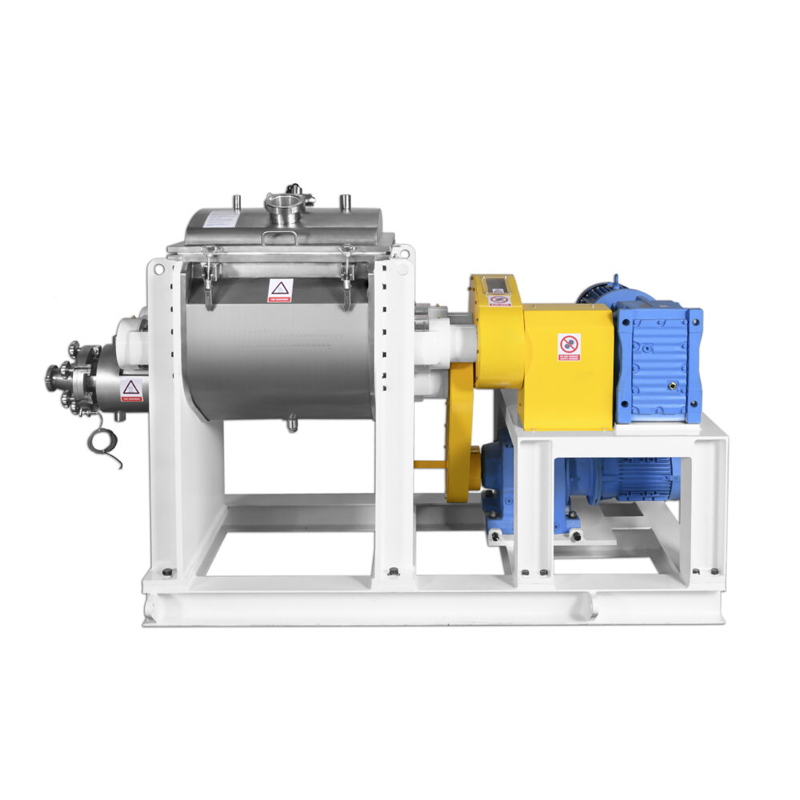
How it Works
After kneading, the hydraulic system advances the screw unit into contact with the material. The rotating screw continuously force-extrudes the high-viscosity material to downstream equipment. Adjustable screw speed, combined with auxiliary blade pushing, handles viscous materials that cannot rely on gravity discharge, with optional in-line filtering and deaeration during extrusion.
Features at a Glance
Powerful extrusion
Screw force-feeding handles materials of several million cP.
Shaping on discharge
Discharge provides initial shaping and deaeration, connecting directly to pelletizing or extrusion equipment.
Residue-free design
Precision-machined screw and vessel clearance ensures thorough discharge and easy cleaning for material changeover.
Vacuum kneading
Vacuum can be maintained throughout kneading and discharge to avoid oxidation and air entrapment.
Technical Specifications
| Working capacity | 300L – 6000L |
|---|---|
| Blade type | Z 型 / Σ型 (Z-type / Sigma-type) |
| Screw diameter | Φ150 – Φ400 mm |
| Screw speed | 0 – 30 rpm(变频可调) |
| Motor power | 18.5 – 200 kW |
| Vacuum rating | -0.098 MPa |
| Contact material | 304 / 316L 不锈钢 |
| Discharge | 螺杆挤出(screw extrusion) |
Frequently Asked Questions
If material flows by gravity (pasty, slurry), choose bottom discharge for lower cost. For highly viscous, sticky materials that cannot flow naturally (butyl rubber, hot-melt adhesive, mastics), choose screw discharge for thorough, high-force unloading.
Yes. Vacuum can be maintained throughout, and screw extrusion provides additional deaeration - suitable for air-sensitive materials like silicone sealant and electronic potting compound.
A kneader is a mixing machine for high-viscosity materials. Two Z-type (or sigma-type) blades rotate in opposite directions inside the vessel, producing shear, folding and squeezing on the material for uniform kneading. It is widely used for silicone sealant, hot-melt adhesive, butyl rubber and battery slurry.
Vertical kneaders have a vertical vessel with blades entering from above - compact, space-saving, suitable for small-medium batches and frequent changeover. Horizontal kneaders have a horizontal vessel with larger batch capacity, suitable for medium-large production. The choice depends on batch size, workshop space and discharge method.
Kneaders handle pasty materials from 10,000 cP up to several million cP - the range that dispersers and mixers cannot cover. The upper limit depends on blade type, motor configuration and material properties.
The three cover different viscosity ranges. High-speed dispersers handle low-to-medium viscosity slurries below 10,000 cP through high-speed shear; planetary mixers use revolution plus rotation for pastes from tens of thousands to hundreds of thousands cP; kneaders are dedicated to materials above 100,000 cP, including semi-dry compounds, using folding and squeezing action - a common choice for sealants, hot-melt adhesives and battery slurry.
Related Products
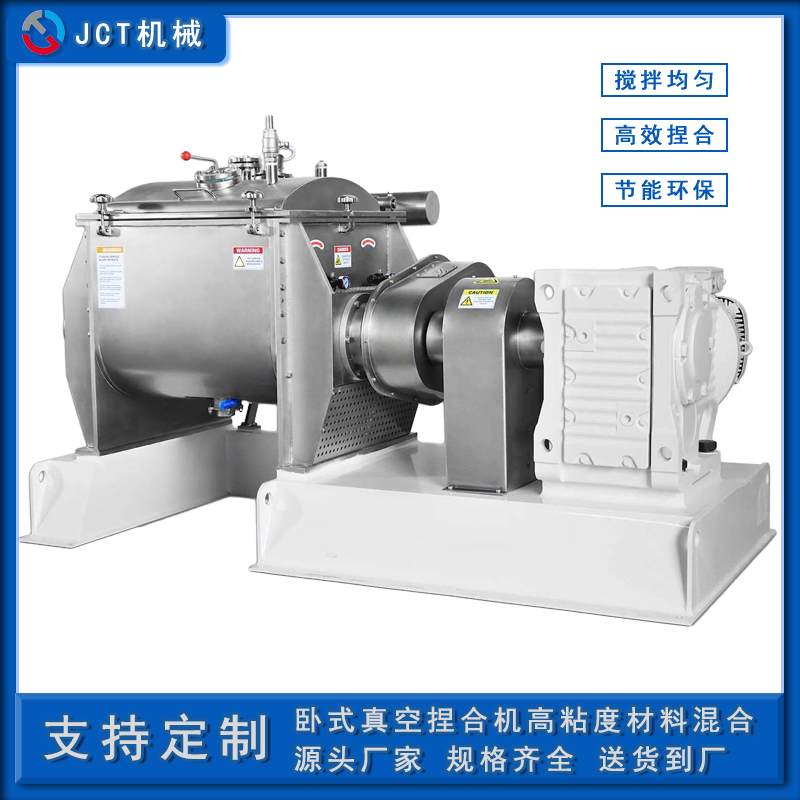
Horizontal Kneader with Bottom Discharge
Direct discharge through bottom gate valve with minimal residue and high efficiency
Learn more →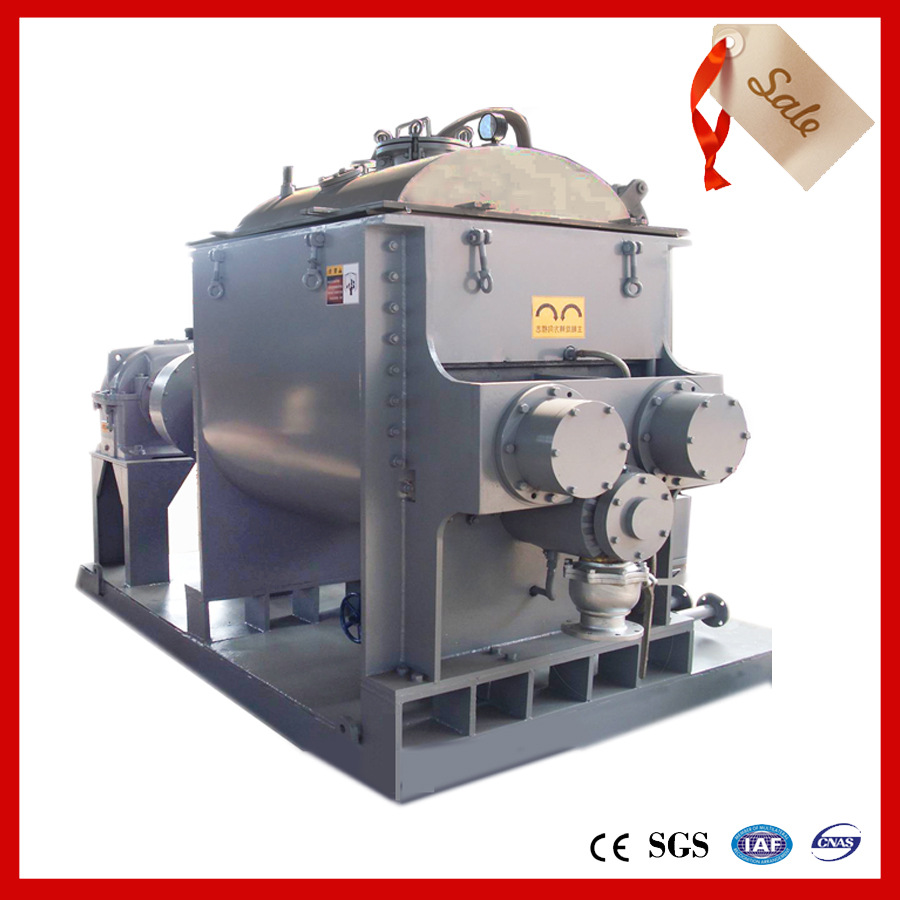
Horizontal Kneader with Hydraulic Tilting
Full-vessel hydraulic tilting discharge for complete unloading and easy maintenance
Learn more →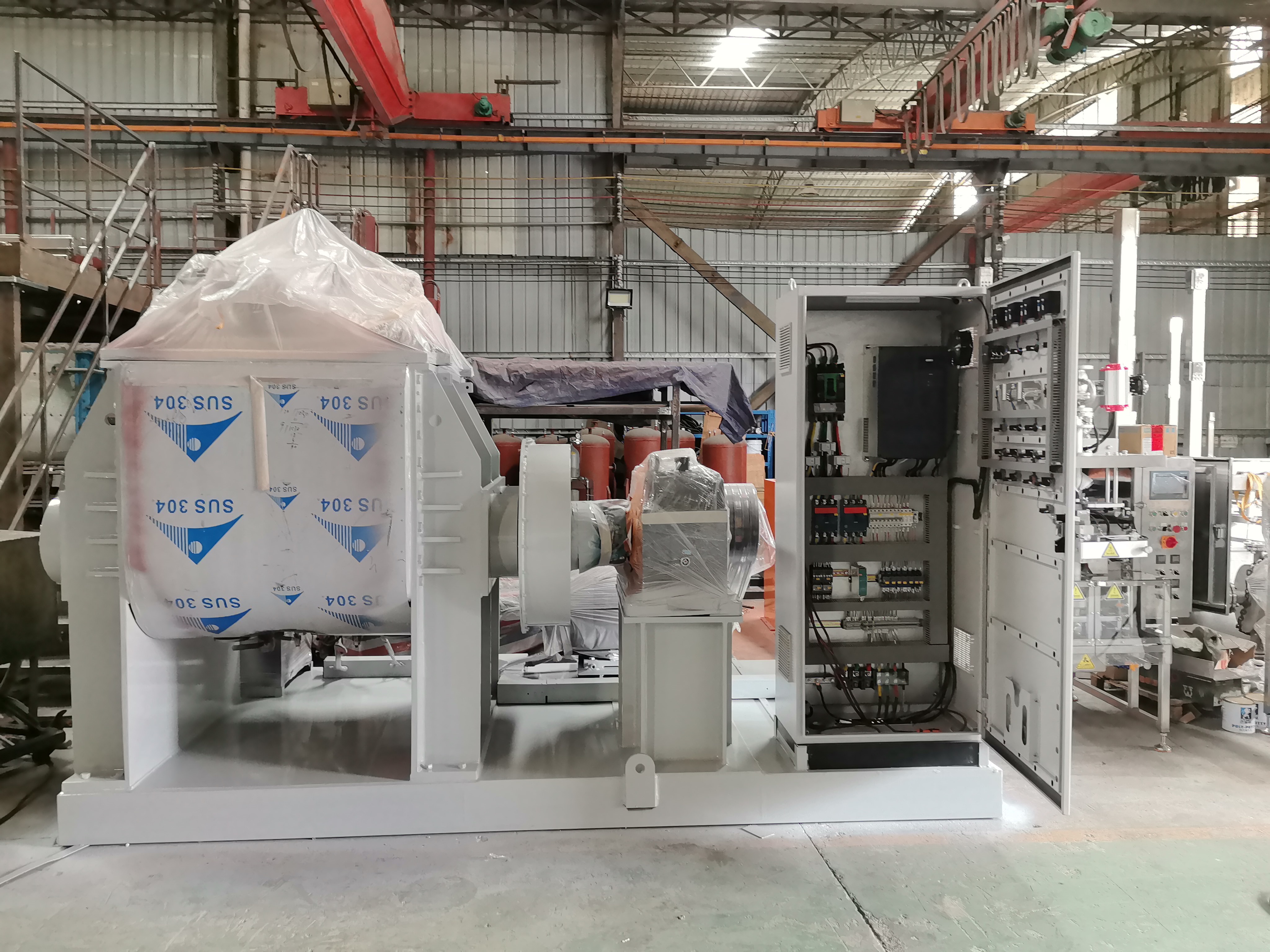
1000L Horizontal Vacuum Kneader (Bottom Discharge)
Efficient dispersion, vacuum degassing, and zero-residue bottom discharge—the 1000L Horizontal Kneader, the ideal kneader solution for high-viscosity materials.
Learn more →