

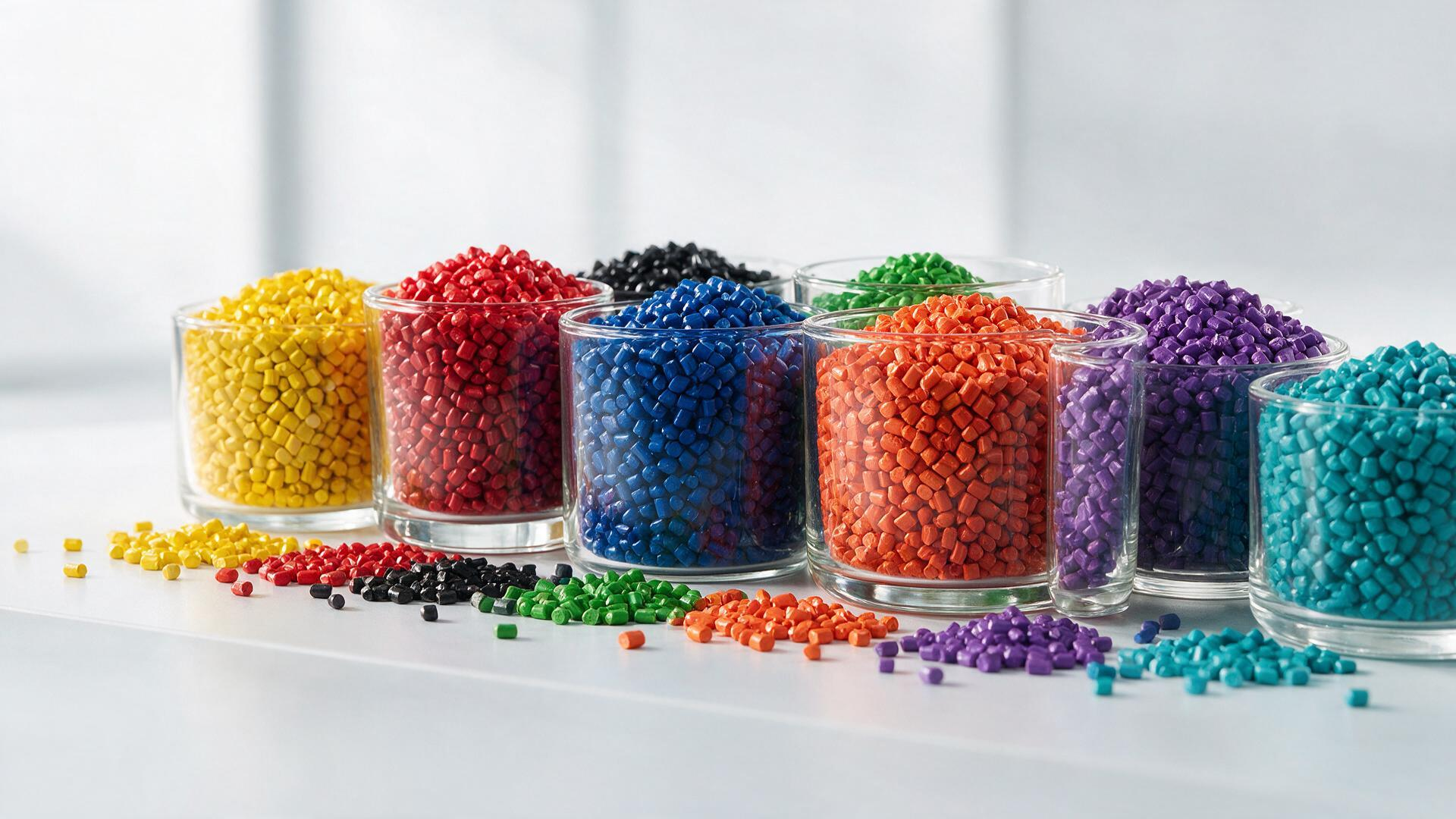
Production Process & Kneading Stage
Typical masterbatch line: carrier resin melting → high-loading pigment dispersion → dispersant/coupling agent blending → discharge and pelletizing. Pigment dispersion is the core value — if agglomerates survive, downstream products show color spots, streaks and shade drift.
Typical kneading sequence:
- Carrier melting: carrier resin or wax melted first to establish the flow phase;
- Pigment in portions: powder charged in 3-5 batches, each kneaded to full wet-out before the next — never allow "sandwich" agglomerates;
- High-shear dispersion: tight-gap shearing breaks pigment agglomerates (finer de-agglomeration follows in twin-screw or three-roll);
- Additives: dispersing wax and coupling agents added in mid/late stage to avoid early volatilization;
- Discharge & pelletizing: screw discharge to twin-screw or strand pelletizing.
Key controls: wet-out speed and dust control, fineness-of-grind checks, color-change cleaning, wear protection against ultra-fine pigments.
Material Characteristics → Equipment Requirements
| Material characteristic | Process impact | Equipment requirement |
|---|---|---|
| Ultra-fine, abrasive pigments | Blade/cylinder wear, metal contamination | Tungsten-carbide hardfacing or ceramic coating |
| Light, dusty, agglomerating powders | Charging loss, uneven dispersion | Sealed charging, high-shear kneading, wall scraper |
| High pigment loading (20-60%) | High torque, slow wet-out | Low-speed high-torque model |
| Frequent color changes | Color carry-over, cleaning cost | Hydraulic tilting, quick-strip washable design |
| Heat-sensitive carrier/additives | Discoloration, decomposition | Jacket temperature control, temperature logs |
For masterbatch, rank wear resistance and color-change convenience above raw torque — they decide the running cost.