
5L Laboratory Kneader
Precisely simulating production conditions with efficient dispersion for微量 materials—the 5L Lab Kneader, the ideal kneader partner for R&D formulations.
This 5L Laboratory Kneader is designed specifically for university labs, corporate R&D centers, and pilot workshops. As a miniaturized precision kneader, it perfectly replicates the shear and mixing logic of industrial-scale kneaders. With a mere 5-liter capacity, it completes formulation verification, process parameter exploration, and physical property testing for high-viscosity materials using minimal samples. Whether for silicone sealants, lithium battery slurries, or polymer materials, this lab kneader provides accurate and reliable data support, serving as the bridge between laboratory R&D and industrial production.
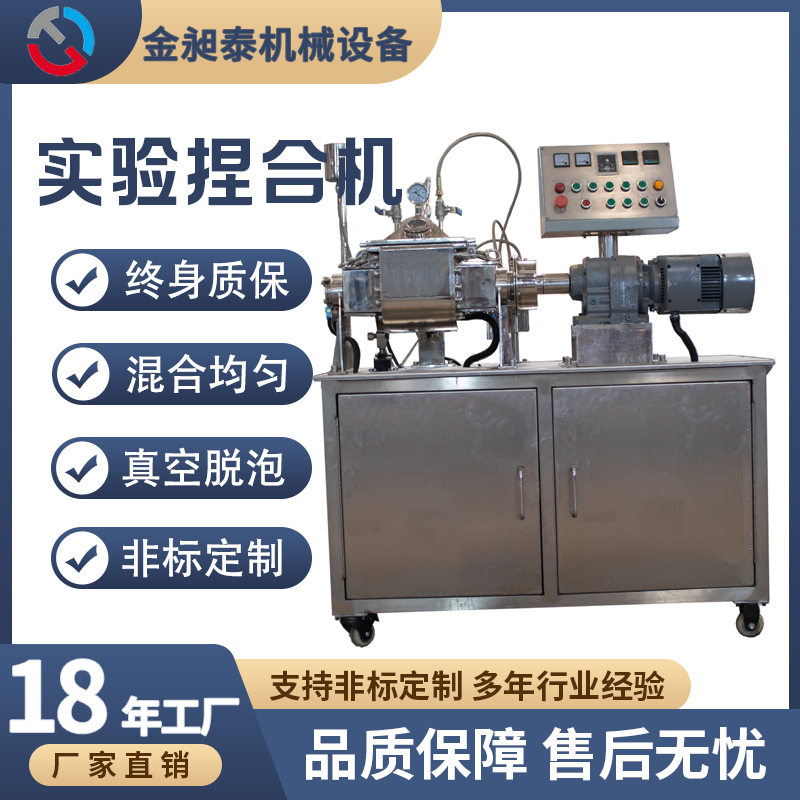
How it Works
The lab kneader operates via a pair of Z-type or Sigma-type blades rotating at different speeds in opposite directions within the trough. This generates intense shear, compression, folding, and stretching forces on the material. Under vacuum or atmospheric pressure, the complex motion trajectory of the blades ensures comprehensive turbulent mixing within the 5L confined space, achieving extremely high uniformity in a short time to complete dispersion, kneading, and reaction processes.
Features at a Glance
Precise Jacket Temperature Control
Equipped with electric heating or oil circulation jackets and PID intelligent temperature controllers, ensuring minimal temperature fluctuation in this small kneader during experiments, truly replicating the production process thermal environment.
High-Efficiency Vacuum Sealing
The trough features high-quality sealing rings and vacuum valve designs, capable of withstanding high negative pressure to effectively remove bubbles from high-viscosity materials, ensuring the density of experimental samples—a standard feature of high-quality kneaders.
Multiple Safety Protections
Designed for laboratory environments, this kneader features lid-open stop interlocks, motor overload protection, and emergency stop buttons, comprehensively safeguarding researchers' personal safety and equipment stability.
Easy Disassembly & Cleaning
Both the blades and the trough can be quickly disassembled with no sanitary dead corners, facilitating material changes for different formulations and greatly enhancing the usage efficiency and flexibility of the experimental kneader.
Technical Specifications
| Effective Volume | 5 Liters |
|---|---|
| Blade Speed (Fast/Slow) | 30/15 rpm (Customizable) |
| Motor Power | 2.2 kW - 3 kW |
| Heating Power | 2 kW - 3 kW |
| Ultimate Vacuum | -0.098 MPa |
Frequently Asked Questions
Yes. In addition to standard stainless steel, we can provide customized kneader blades made of special materials such as titanium-plated stainless steel or tungsten carbide coatings based on your material characteristics (e.g., strong acids/alkalis or explosion-proof requirements).
Considering the convenience of laboratory operations, this small kneader typically uses manual tilting or hydraulic-assisted tank tilting for discharging, which is simple to operate and easy to clean.
A kneader is a mixing machine for high-viscosity materials. Two Z-type (or sigma-type) blades rotate in opposite directions inside the vessel, producing shear, folding and squeezing on the material for uniform kneading. It is widely used for silicone sealant, hot-melt adhesive, butyl rubber and battery slurry.
Vertical kneaders have a vertical vessel with blades entering from above - compact, space-saving, suitable for small-medium batches and frequent changeover. Horizontal kneaders have a horizontal vessel with larger batch capacity, suitable for medium-large production. The choice depends on batch size, workshop space and discharge method.
Kneaders handle pasty materials from 10,000 cP up to several million cP - the range that dispersers and mixers cannot cover. The upper limit depends on blade type, motor configuration and material properties.
The three cover different viscosity ranges. High-speed dispersers handle low-to-medium viscosity slurries below 10,000 cP through high-speed shear; planetary mixers use revolution plus rotation for pastes from tens of thousands to hundreds of thousands cP; kneaders are dedicated to materials above 100,000 cP, including semi-dry compounds, using folding and squeezing action - a common choice for sealants, hot-melt adhesives and battery slurry.
Related Products
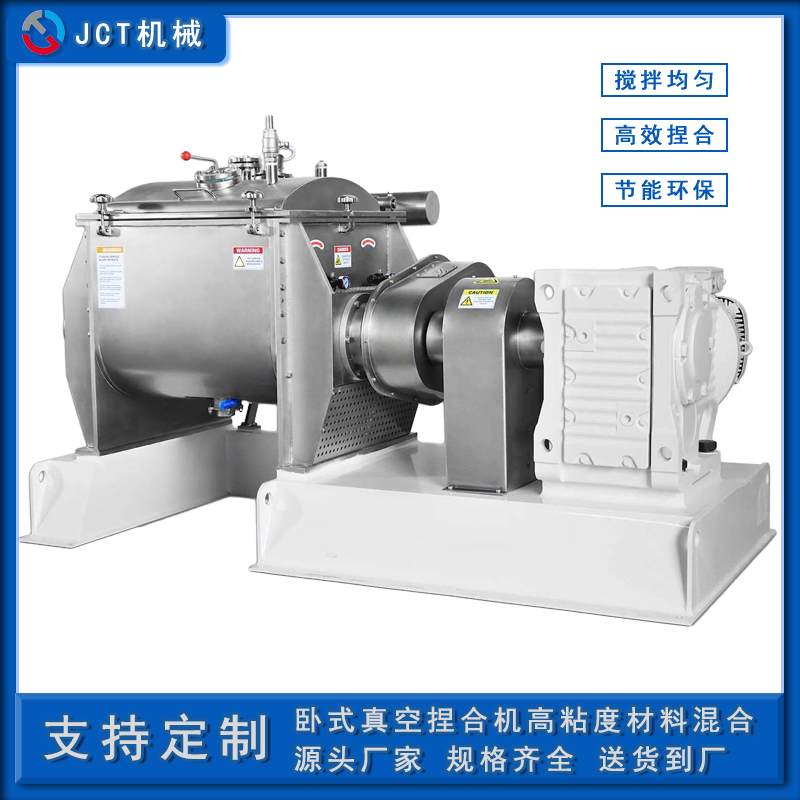
Horizontal Kneader with Bottom Discharge
Direct discharge through bottom gate valve with minimal residue and high efficiency
Learn more →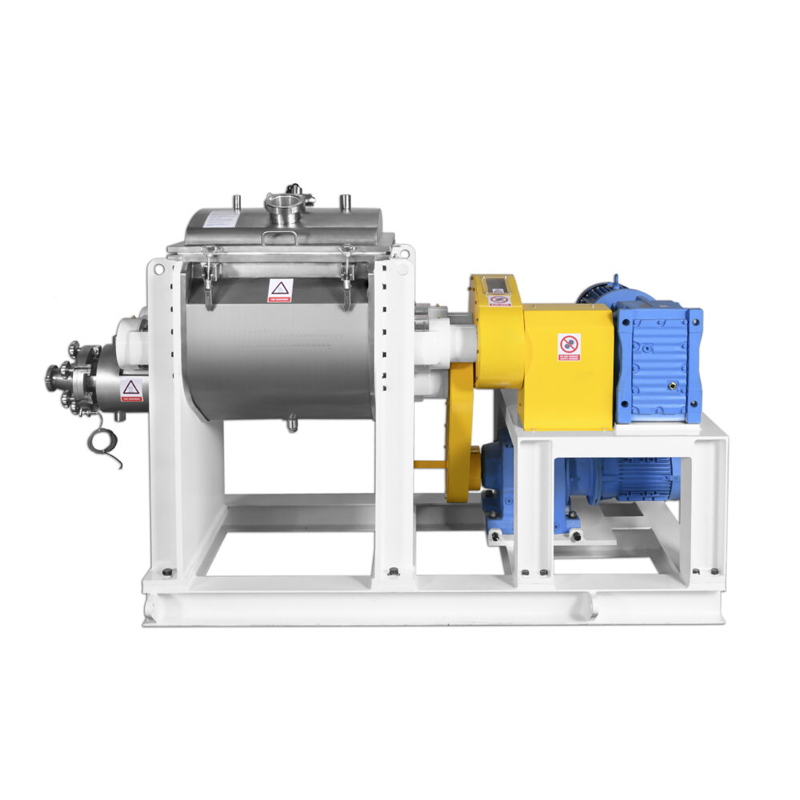
Horizontal Kneader with Screw Discharge
Screw extrusion discharge for high-viscosity sticky materials
Learn more →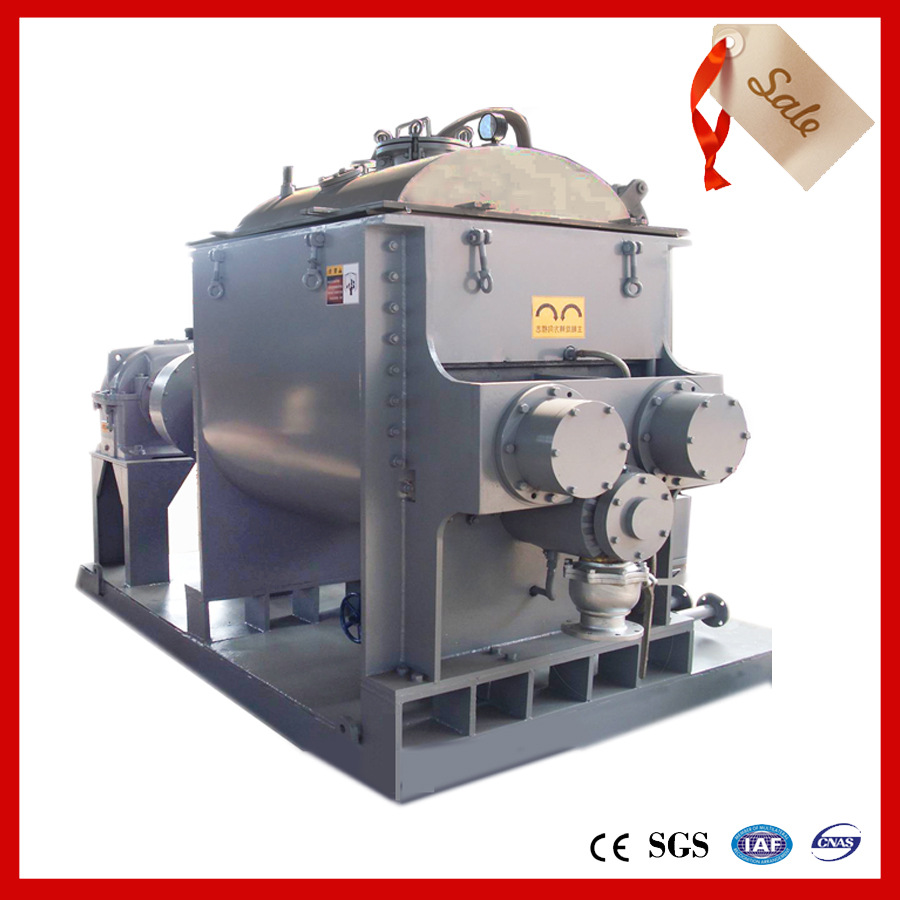
Horizontal Kneader with Hydraulic Tilting
Full-vessel hydraulic tilting discharge for complete unloading and easy maintenance
Learn more →