
500L Kneader for HTV Silicone Rubber (Hydraulic Tilting)
Sigma dual blades at 42/28 rpm, PTFE packing to keep wear particles out of the batch, and hydraulic tilting beyond 95° for complete discharge — configured for silicone rubber
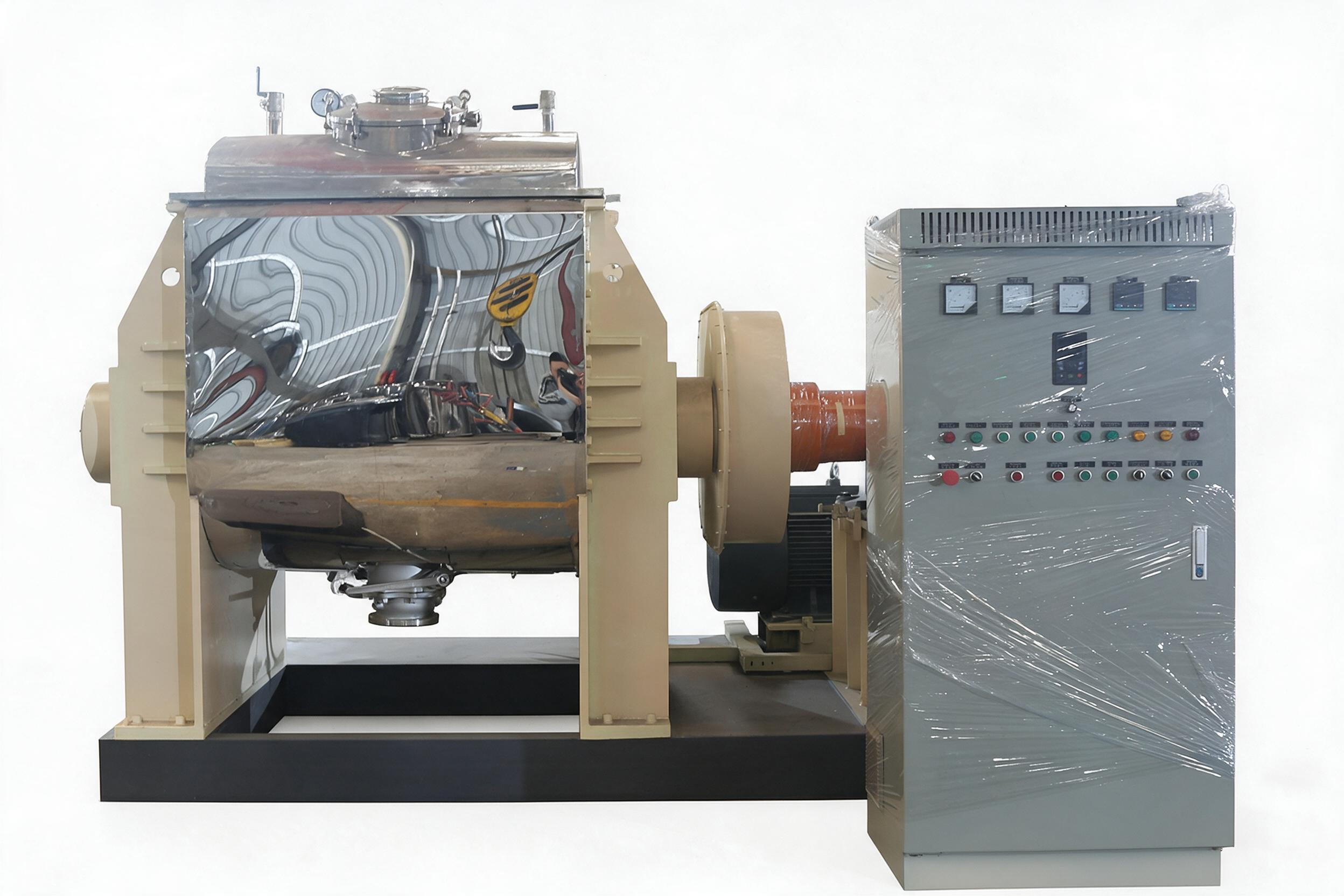
This 500L kneader for HTV silicone rubber is a horizontal hydraulic-tilting machine with a nominal capacity of 500 L and a total volume of about 550 L. The W-shaped vessel is 10 mm thick in SS304 with a 6 mm outer jacket containing multiple flow-guide baffles that distribute the heat-transfer medium evenly along the wall, avoiding local hot and cold zones. The machine displays both material temperature and cooling-water temperature, so the true product temperature can be judged rather than the medium alone. Agitation uses twin sigma blades — cast steel bodies, rough-turned and then clad in SS304 sheet — running at 42/28 rpm. The differential speed produces continuous folding and shearing of high-elasticity compound. The shaft seal is a PTFE packing design arranged so that the black particles generated by packing wear cannot enter the vessel — for light-coloured and translucent silicone rubber this single detail decides whether the finished appearance passes. Discharge is by hydraulic tilting beyond 95°, tipping the compound out under gravity without fixed dead corners. The hydraulically opened cover reaches 75° and carries a DN100 illuminated sight glass for direct observation during compounding. Vacuum is provided by a 2BV-5111 water-ring pump with a 200 L buffer tank for deaeration during compounding and discharge. The vessel is insulated with two layers and clad in 1 mm stainless sheet.\n\nTypical materials: HTV silicone rubber compound and various silicone base stocks, plus high-elasticity compounds requiring vacuum deaeration and complete discharge. Heating method (thermal oil circulation, jacketed electric heating or steam) is selected to suit the specific process.
How it Works
After charging, the twin sigma blades counter-rotate at a 42/28 rpm differential. The fast blade shears and tears the compound while the slow blade folds and pushes it forward, and together they establish a continuous turnover loop inside the vessel. The narrow gap between blade and wall provides the main shear surface and is the core dispersion zone. Vacuum can be applied during compounding: the 2BV-5111 water-ring pump with a 200 L buffer tank holds vessel pressure stable, carrying bubbles to the surface where they escape as the compound turns over. Cooling water (or a heat-transfer medium, depending on process) circulates through the jacket, and the internal baffles distribute it evenly along the wall; material and cooling-water temperatures are displayed together so heat transfer can be checked at a glance. At the end of a batch the hydraulic system opens the cover to 75°, then tilts the entire vessel beyond 95° so the compound pours out under gravity. Tilting discharge leaves no fixed scraping dead corner, and cleanability at changeover is better than a fixed-vessel design — an advantage in multi-formulation, multi-colour silicone production.
Features at a Glance
Twin sigma blades at 42/28 rpm
Counter-rotating blades at differential speed: the fast blade shears and tears while the slow blade folds and pushes, setting up a continuous turnover loop. Cast steel bodies clad in SS304 combine strength with corrosion resistance.
PTFE packing that keeps wear particles out
The shaft seal uses a PTFE packing arrangement designed so that black particles from packing wear cannot enter the vessel. For light-coloured and translucent silicone rubber this single detail decides whether the finished appearance passes.
Hydraulic tilting beyond 95°
The whole vessel tilts to discharge, pouring the compound out under gravity with no fixed dead corner. The cover opens hydraulically to 75° for charging, observation and cleaning.
Baffled jacket for uniform temperature
A 6 mm outer jacket with multiple flow-guide baffles distributes the medium evenly along the wall, avoiding local hot and cold zones. Material and cooling-water temperatures are displayed at both points.
Water-ring vacuum with 200 L buffer
A 2BV-5111 water-ring pump with a 200 L buffer tank stabilises vessel pressure and damps pump pulsation that would otherwise distort deaeration judgement. Vacuum is available during both compounding and discharge.
Technical Specifications
| Nominal capacity | 500 L |
|---|---|
| Total volume | ≈550 L |
| Vessel type | W 形,壁厚 10 mm,SS304 (W-shape, 10 mm, SS304) |
| Jacket | 6 mm 外夹套 + 多组导流加强板;物料与冷却水双点测温 |
| Motor power | 37 kW-6P |
| Shaft seal | 特氟龙(PTFE)填料,防黑粒进入缸体 |
| Discharge | 液压翻缸,翻转角度 ≥95° |
| Cover opening | 液压开盖,开启角度 ≤75° |
| Observation and insulation | DN100 带照明观察窗;缸体内包 2 层保温 |
Frequently Asked Questions
With a nominal 500 L and a total volume of about 550 L, a fill factor of 0.6–0.7 corresponds to roughly 330–385 L of effective charge per batch. Below that range the blades cannot grip the compound and mixing efficiency collapses; above it, material is squeezed onto the cover and sealing surfaces, vacuum head space becomes insufficient and torque demand rises. The actual value must be established by material trial according to viscosity and filler loading.
Packing-type seals wear over time, and the black debris they generate will contaminate the compound if it enters the vessel. For light-coloured, translucent and white silicone rubber, that contamination effectively scraps the batch; for electronic-grade or medical-grade compounds it can also raise cleanliness compliance issues. This machine uses PTFE packing with a protective arrangement designed to keep wear material out of the vessel. Packing is a wear part and should be inspected and replaced on an operating-hours schedule.
The standard configuration provides a jacketed cooling-water circuit with dual-point display for material and cooling-water temperature, which suits silicone compounding where shear heat dominates and cooling is needed. Where active heating is required, the jacket can be specified with thermal-oil circulation, jacketed electric heating or steam heating — the choice depends on target temperature, heating rate and whether the site has a thermal-oil heater or steam supply. Please state the process temperature and site heat source when enquiring.
A kneader is a mixing machine for high-viscosity materials. Two Z-type (or sigma-type) blades rotate in opposite directions inside the vessel, producing shear, folding and squeezing on the material for uniform kneading. It is widely used for silicone sealant, hot-melt adhesive, butyl rubber and battery slurry.
Vertical kneaders have a vertical vessel with blades entering from above - compact, space-saving, suitable for small-medium batches and frequent changeover. Horizontal kneaders have a horizontal vessel with larger batch capacity, suitable for medium-large production. The choice depends on batch size, workshop space and discharge method.
Kneaders handle pasty materials from 10,000 cP up to several million cP - the range that dispersers and mixers cannot cover. The upper limit depends on blade type, motor configuration and material properties.
The three cover different viscosity ranges. High-speed dispersers handle low-to-medium viscosity slurries below 10,000 cP through high-speed shear; planetary mixers use revolution plus rotation for pastes from tens of thousands to hundreds of thousands cP; kneaders are dedicated to materials above 100,000 cP, including semi-dry compounds, using folding and squeezing action - a common choice for sealants, hot-melt adhesives and battery slurry.
Related Products
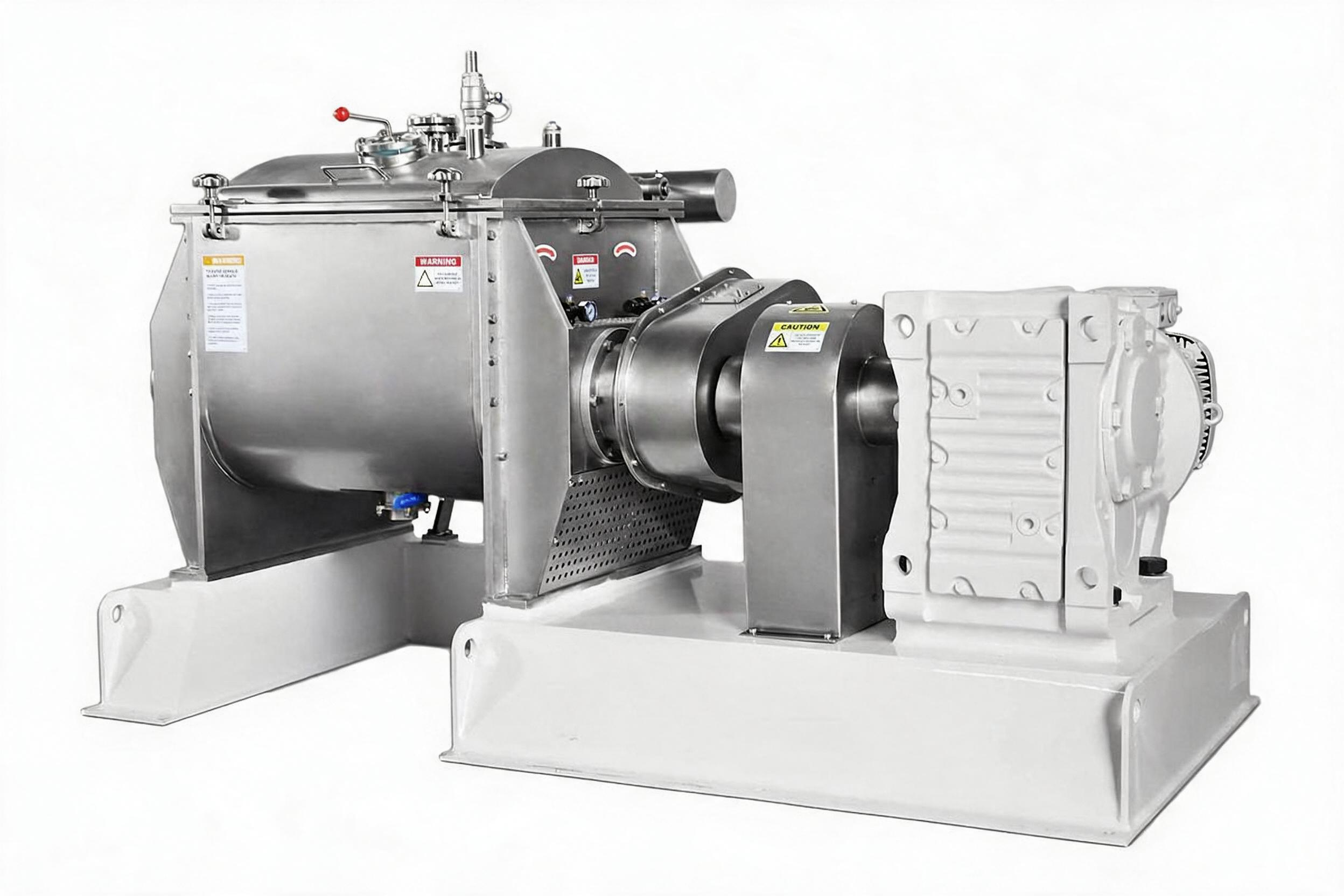
Horizontal Kneader with Bottom Discharge
Direct discharge through bottom gate valve with minimal residue and high efficiency
Learn more →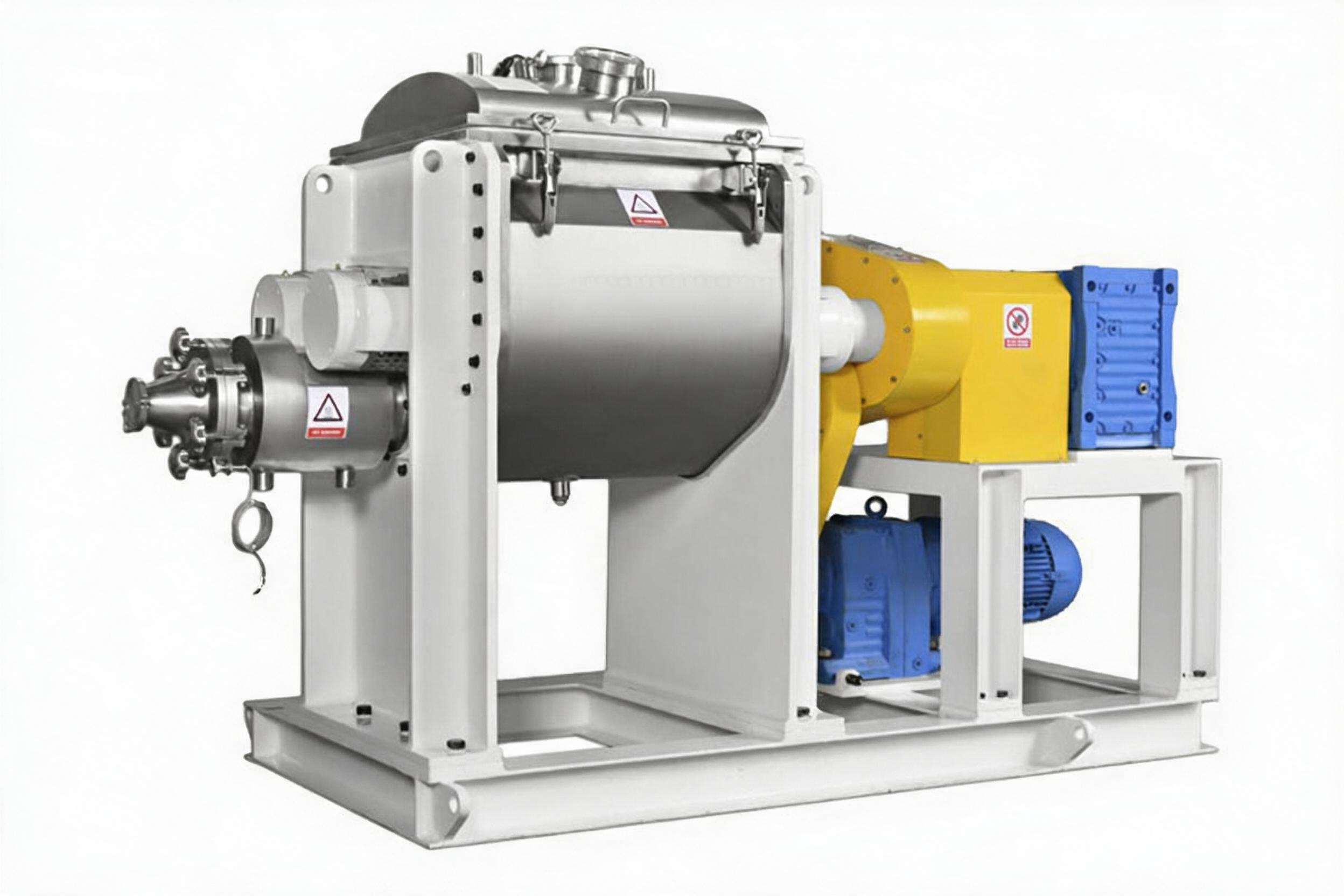
Horizontal Kneader with Screw Discharge
Screw extrusion discharge for high-viscosity sticky materials
Learn more →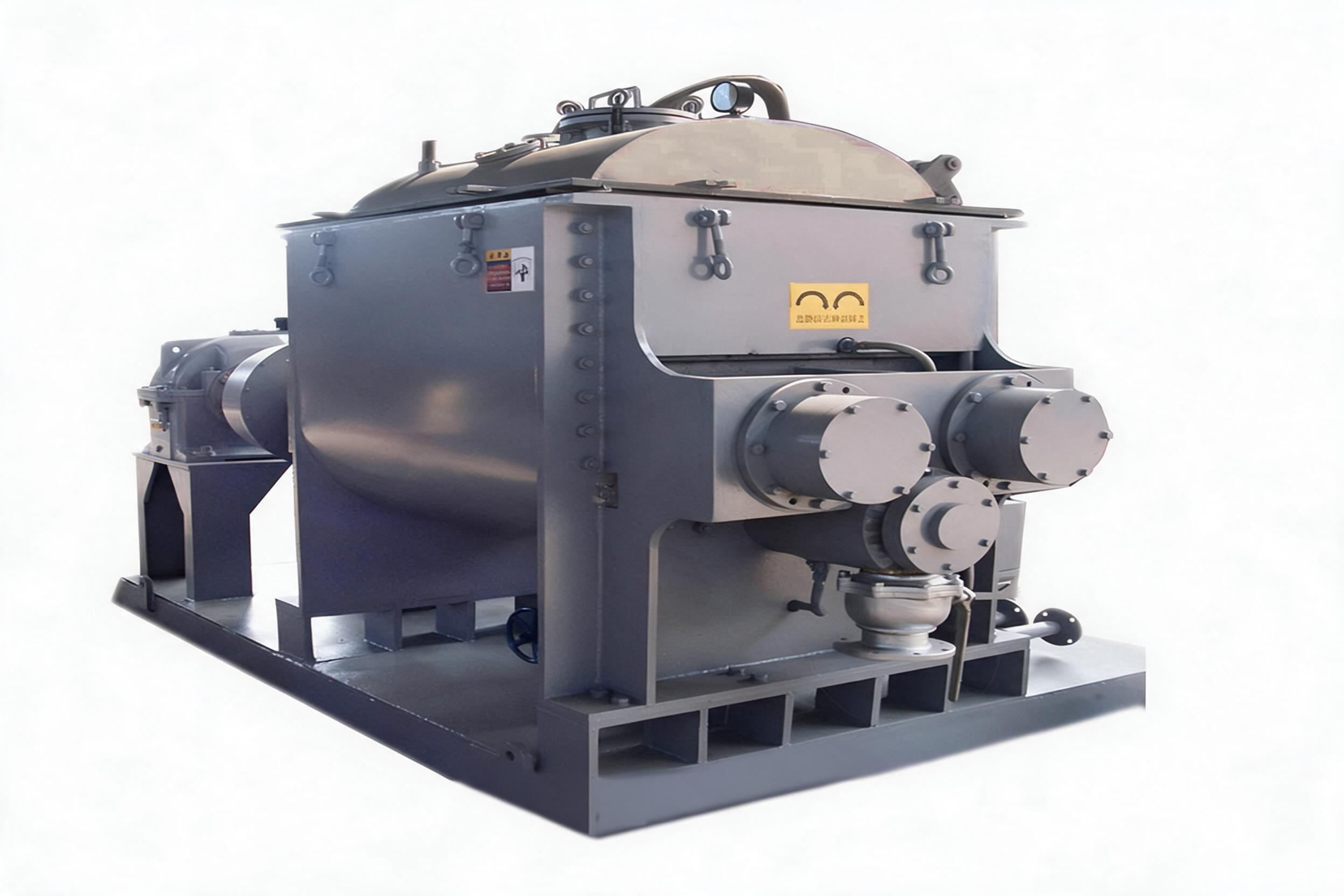
Horizontal Kneader with Hydraulic Tilting
Full-vessel hydraulic tilting discharge for complete unloading and easy maintenance
Learn more →