500L Horizontal Kneader with Bottom Discharge
500L horizontal kneader with bottom discharge delivers efficient, continuous unloading for high-viscosity silicone, rubber, sealant, and polymer kneading applications.
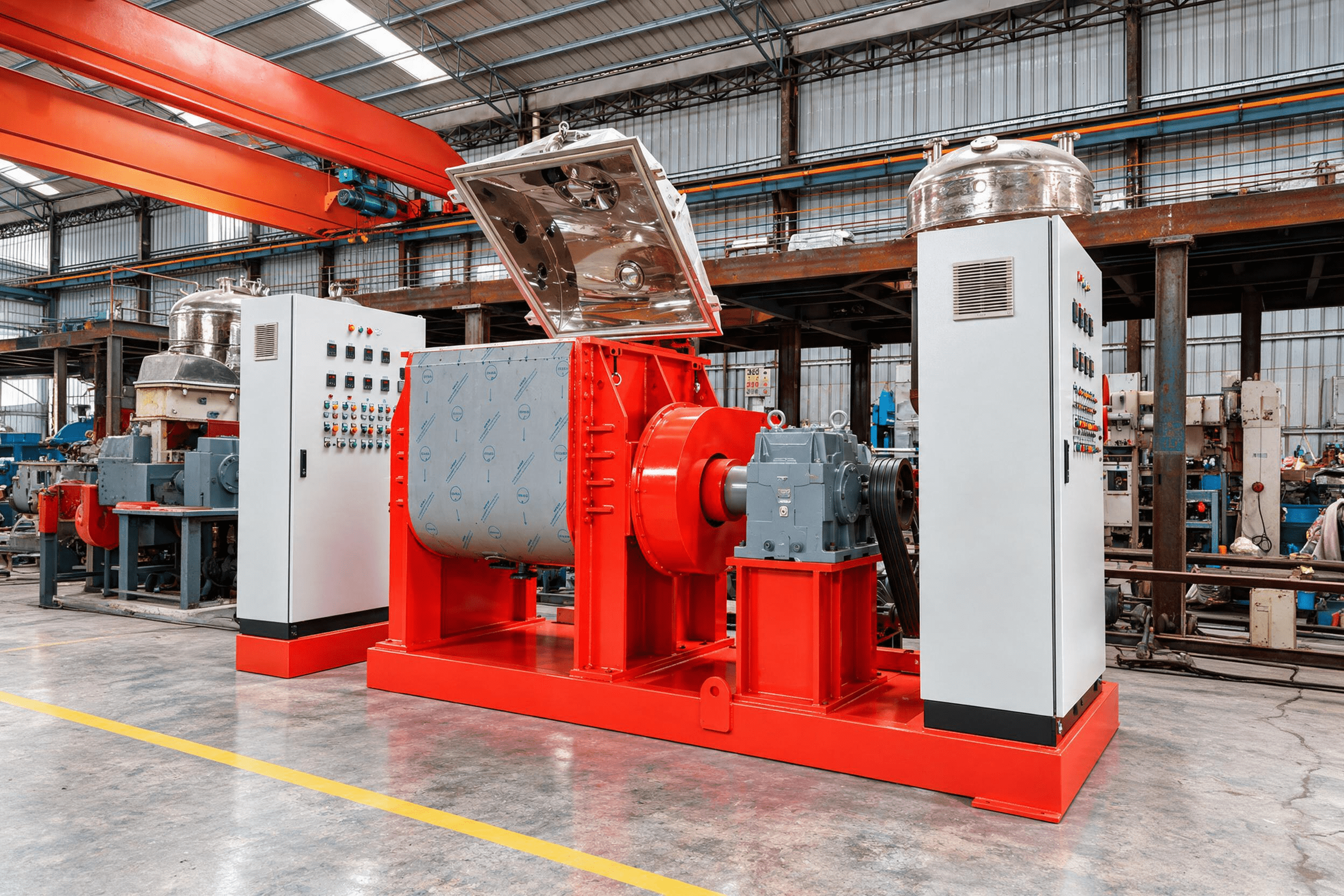
The 500L Horizontal Kneader adopts a horizontal double-shaft Sigma blade structure and is suitable for mixing, kneading, dispersing, and plasticizing medium- to high-viscosity and paste-like materials. It is widely used in the production of silicone rubber, sealants, structural adhesives, hot-melt adhesives, rubber compounds, inks, pigments, carbon materials, battery slurries, and polymer composites. The kneader uses two counter-rotating blades at different speeds to repeatedly shear, compress, fold, and stretch the material inside a W-shaped trough, achieving uniform mixing. The bottom discharge design can be equipped with a ball valve or screw extrusion discharge, reducing manual handling and improving discharge efficiency for easier integration with downstream extrusion, granulation, filling, or packaging lines. Optional configurations include vacuum system, electric heating, thermal oil heating, steam heating, water cooling, PLC control, and explosion-proof motors to meet process requirements for temperature, vacuum, and automation.
How it Works
During operation, the 500L horizontal kneader drives two Sigma blades to rotate in opposite directions at different speeds via a motor and reducer, creating axial and radial circulation inside the horizontal trough. The small clearance between the blades and the trough wall generates strong shear, compression, and stretching forces on high-viscosity materials, promoting uniform dispersion and plasticization. After mixing, the bottom discharge valve or screw extrusion device discharges the material from the bottom of the trough for continuous and controlled unloading. If equipped with a vacuum system, the kneader can remove air and volatiles during kneading, improving material density and batch stability.
Features at a Glance
Horizontal Double-Shaft Sigma Blade Mixing
Dual Sigma blades rotate in opposite directions at different speeds, allowing the material to be fully mixed under shear, compression, and folding. This design suits high-viscosity, paste-like, and elastoplastic materials, improving the kneader’s mixing uniformity.
Bottom Discharge for Continuous Production
Supports ball valve bottom discharge , reducing tank tilting operations and improving discharge efficiency. It is easy to connect with downstream extruders, granulators, and filling machines, making it suitable for batch kneader production lines.
Optional Vacuum, Heating, and Cooling Systems
Optional vacuum system, electric heating, thermal oil heating, steam heating, and water cooling support degassing, heated reaction, holding dispersion, and cooled discharge, enabling the kneader to handle a wider range of high-viscosity applications.
PLC Control and Reliable Sealing Structure
Optional PLC/HMI control, variable-frequency speed adjustment, hydraulic cover operation, and temperature monitoring, combined with an improved shaft sealing structure, help reduce leakage and contamination risks, improving the kneader’s stability and operability during continuous production.
Technical Specifications
| Effective Volume | 500 L |
|---|---|
| Stirring Type | 卧式双轴 Σ 形桨叶 / Horizontal Double-Shaft Sigma Blades |
| Main Motor Power | 22 kW - 45 kW(视物料粘度而定)/ 22-45 kW (depends on viscosity) |
| Stirring Speed | 典型 36/22 rpm 或 42/28 rpm,变频可调 / Typical 36/22 or 42/28 rpm, VFD adjustable |
| Heating Method | 电加热 / 导热油加热 / 蒸汽加热可选 / Electric, thermal oil, or steam heating optional |
| Cooling Method | 夹套水冷却可选 / Jacket water cooling optional |
| Ultimate Vacuum | ≤ -0.094 MPa(可选)/ ≤ -0.094 MPa (optional) |
| Discharge Method | 底部球阀出料 |
| Contact Material | SUS304 / SUS316L 不锈钢可选 / SUS304 or SUS316L stainless steel optional |
| Control System | 按钮控制 / PLC+HMI 可选 / Button control or PLC+HMI optional |
Frequently Asked Questions
It is suitable for silicone rubber, sealants, structural adhesives, hot-melt adhesives, rubber compounds, inks, pigments, carbon materials, battery slurries, paste cosmetics, and polymer composites. The final configuration should be confirmed based on material viscosity, temperature, vacuum requirements, and discharge method to determine the appropriate kneader solution.
Hydraulic tilting discharge has a simple structure and is easy to maintain, making it suitable for multi-product, small-batch, or frequent-cleaning scenarios. Bottom discharge is better for continuous production and can be paired with screw extrusion for controlled unloading and easier integration with downstream equipment. For highly automated lines, a bottom-discharge kneader is usually more suitable.
To ensure proper kneading performance and stable motor load, the filling coefficient is generally recommended between 0.55 and 0.70. This means the effective loading per batch for a 500L kneader is typically around 275L-350L, subject to the material’s specific gravity and viscosity.
Yes. It can be customized with a vacuum system, explosion-proof motor, PLC/HMI control, thermal oil heating, steam heating, water cooling, SUS316L material, and screw extrusion bottom discharge. Please provide material viscosity, process temperature, vacuum requirements, and site power conditions to confirm the final kneader configuration.
A kneader is a mixing machine for high-viscosity materials. Two Z-type (or sigma-type) blades rotate in opposite directions inside the vessel, producing shear, folding and squeezing on the material for uniform kneading. It is widely used for silicone sealant, hot-melt adhesive, butyl rubber and battery slurry.
Vertical kneaders have a vertical vessel with blades entering from above - compact, space-saving, suitable for small-medium batches and frequent changeover. Horizontal kneaders have a horizontal vessel with larger batch capacity, suitable for medium-large production. The choice depends on batch size, workshop space and discharge method.
Kneaders handle pasty materials from 10,000 cP up to several million cP - the range that dispersers and mixers cannot cover. The upper limit depends on blade type, motor configuration and material properties.
The three cover different viscosity ranges. High-speed dispersers handle low-to-medium viscosity slurries below 10,000 cP through high-speed shear; planetary mixers use revolution plus rotation for pastes from tens of thousands to hundreds of thousands cP; kneaders are dedicated to materials above 100,000 cP, including semi-dry compounds, using folding and squeezing action - a common choice for sealants, hot-melt adhesives and battery slurry.
Related Products
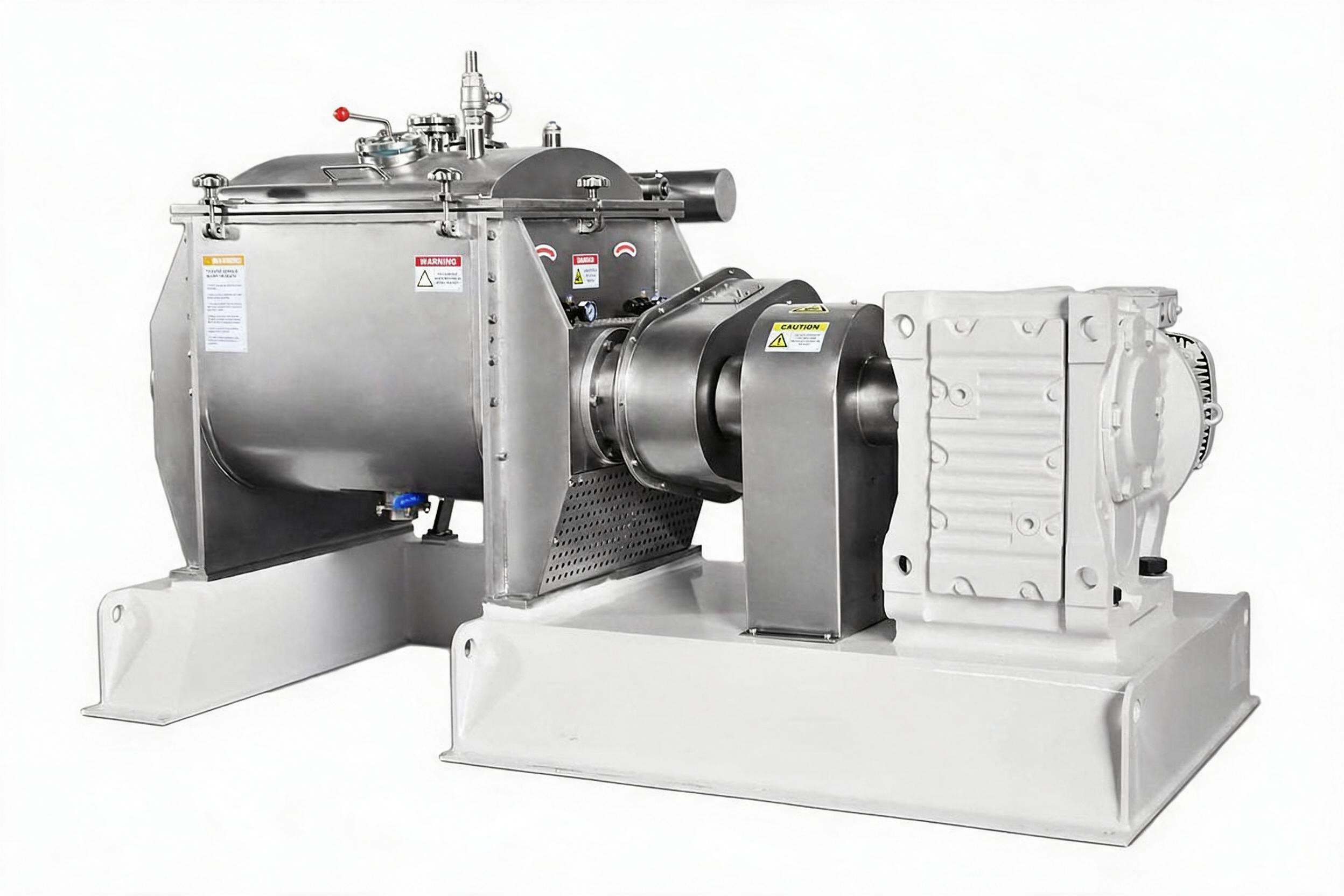
Horizontal Kneader with Bottom Discharge
Direct discharge through bottom gate valve with minimal residue and high efficiency
Learn more →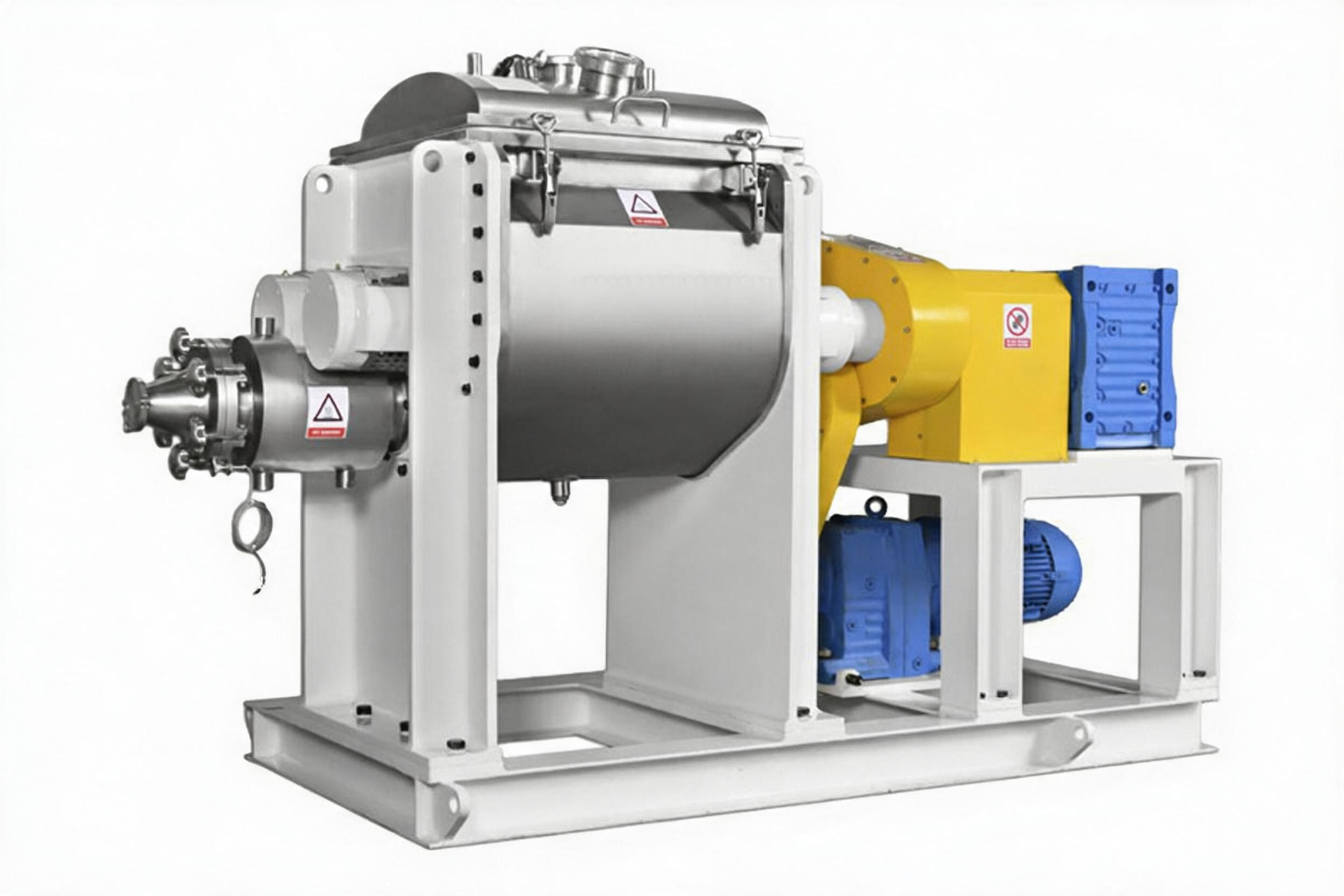
Horizontal Kneader with Screw Discharge
Screw extrusion discharge for high-viscosity sticky materials
Learn more →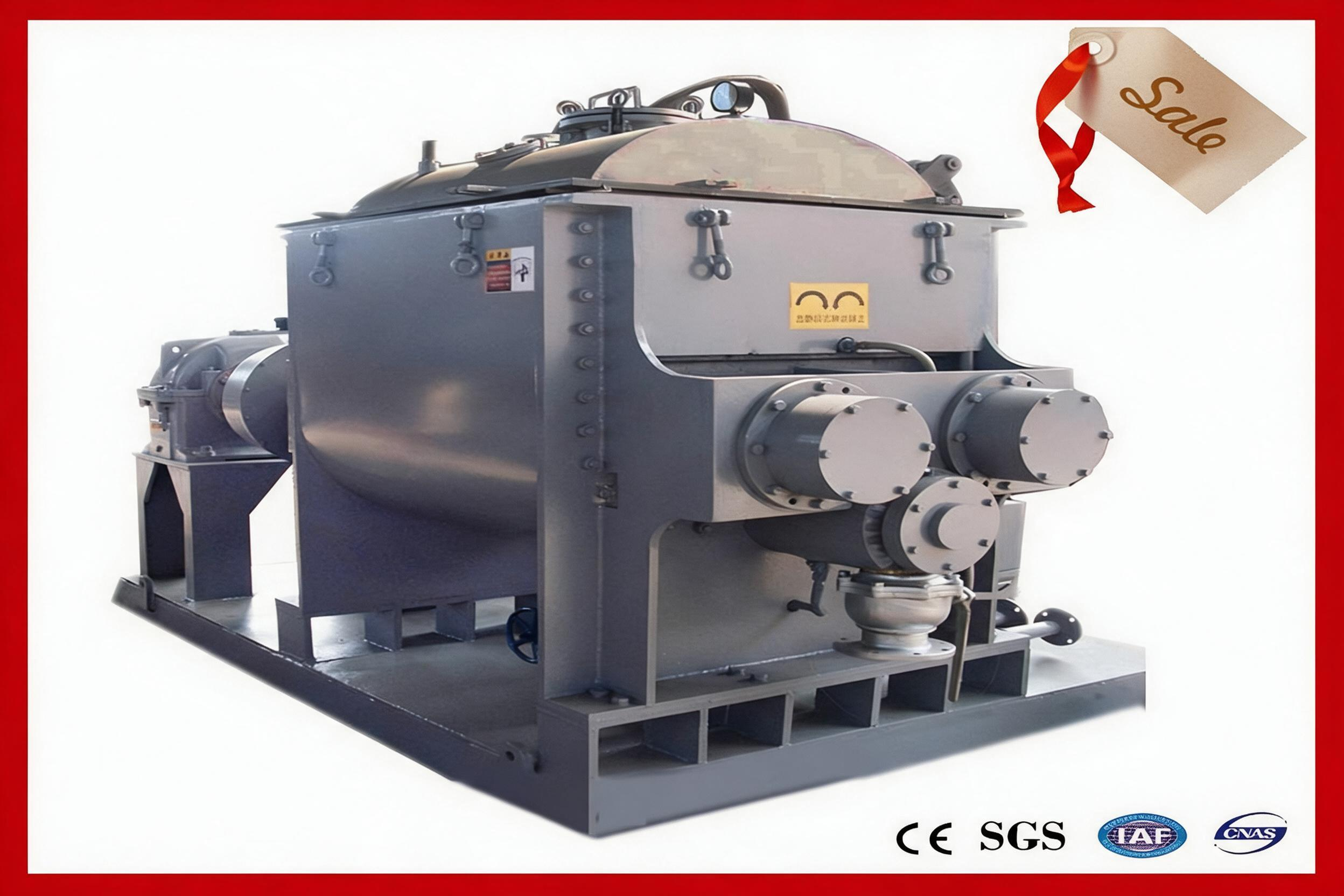
Horizontal Kneader with Hydraulic Tilting
Full-vessel hydraulic tilting discharge for complete unloading and easy maintenance
Learn more →